10 - Wildcard
The Decline of Video as Evidence in the Age of Artificial Intelligence
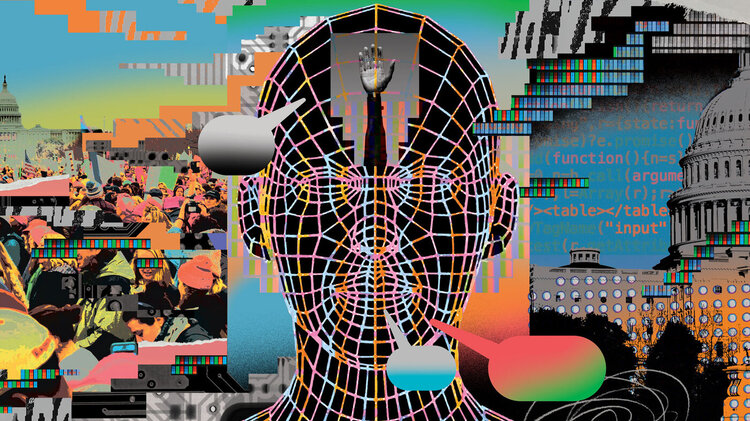
For much of modern media history, video has been treated as one of the most reliable forms of evidence in public communication. Unlike text or audio, moving images carry an intuitive sense of authenticity, shaped by the assumption that cameras capture reality as it happens. News broadcasts, documentary filmmaking, and surveillance footage have traditionally reinforced the idea that “seeing is believing.” However, the rapid development of artificial intelligence-generated video is beginning to disrupt that long-standing relationship between visual media and truth. Tools capable of producing highly realistic synthetic footage now make it possible to fabricate events, people, and environments that never existed, challenging the assumption that video inherently reflects reality. As a result, the cultural authority of video is shifting away from being a form of proof and toward becoming something that must be verified rather than simply believed.
Before the rise of AI-generated media, video held a privileged position as a form of visual evidence in both journalism and everyday communication. The presence of a camera was often enough to validate an event as real, reinforcing the cultural assumption that recorded footage functioned as an objective witness to reality. This belief shaped how news organizations reported major events, with televised footage from protests, natural disasters, and political conflicts often serving as primary evidence that an event had occurred. For example, widely broadcast footage from major global events such as large-scale protests and the 9/11 attacks became central to public understanding precisely because the recordings were assumed to reflect unaltered reality. Beyond journalism, video also carried strong evidentiary weight in legal contexts, where surveillance footage and recorded evidence have historically been used in courtrooms as persuasive proof of events. In both cases, the authority of video rested on the assumption that while editing and framing could influence interpretation, the underlying footage still originated from a real, observable moment in time.
The emergence of AI-generated video and deepfake technology represents a fundamental disruption to the assumption that video is tied to recorded reality. Unlike traditional footage, which is anchored in a physical recording of an event, AI video can be constructed entirely without a camera, allowing for the creation of highly realistic but entirely fabricated scenes. This shift has become increasingly visible within political communication, where synthetic videos are now being used directly in campaign strategies. During the 2026 U.S. midterm election cycle, for example, an AI-generated video circulated that depicted Texas State Representative James Talarico speaking directly to the camera in a campaign-style message, despite him never having filmed the footage (CNN). The video was realistic enough to briefly circulate on social media before being identified as synthetic, illustrating how quickly AI-generated content can enter public discourse. Similar deepfake-style political clips and synthetic videos of public figures have also circulated on platforms such as X, often mimicking legitimate news or campaign messaging formats (Link to previous paper on AI in U.S. politics). As generative tools continue to improve, these examples demonstrate that video is no longer inherently tied to physical reality, but can instead be manufactured to convincingly simulate real-world communication.
As AI-generated video becomes more realistic and widely circulated, the broader consequence is not just the presence of fake content, but a growing collapse in trust toward video as a reliable form of evidence. This shift is often described as a breakdown of “visual certainty,” where viewers can no longer assume that recorded footage reflects real events without additional verification. One major effect of this is the “liar’s dividend,” in which authentic video evidence can be dismissed as fake simply because audiences are now aware that manipulation is possible. In practice, this means that even genuine recordings of public figures or news events can be called into question, weakening the persuasive power of visual documentation. This dynamic is increasingly visible in online environments, where viral clips are frequently met with immediate skepticism and labeled as AI-generated before verification occurs. At the same time, fact-checking organizations report growing difficulty in confirming the authenticity of circulating video content, particularly when clips are shared without context or appear in short-form formats. As a result, video no longer functions as automatic proof, but instead exists in a state of conditional trust that depends on external verification rather than visual content alone.
As video loses its status as automatic evidence, media systems are increasingly forced to rely on external methods of verification rather than trusting visual content on its own. In place of “seeing is believing,” credibility now depends on source validation, metadata analysis, and institutional trust. News organizations have begun implementing more rigorous verification processes for user-generated and viral video content, often cross-checking footage with timestamps, location data, and multiple independent sources before publication. Platforms have also introduced labeling systems and content warnings to signal when media may be AI-generated or manipulated, though these indicators are not always sufficient to prevent confusion. At the same time, audiences themselves increasingly rely on fact-checking organizations and multiple news sources to determine whether video content is authentic. This shift demonstrates that video is no longer treated as self-contained proof, but instead as one piece of evidence within a larger system of verification. In this environment, authority has moved away from the image itself and toward the institutions responsible for interpreting and validating it.
The rise of AI-generated video represents more than a technological advancement, marking a structural shift in how visual media is understood and trusted. Video, once considered a direct reflection of reality, no longer functions as automatic proof in an environment where synthetic content can be produced with increasing realism and speed. As a result, audiences and institutions are forced to adopt new forms of verification that extend beyond the image itself. The assumption that “seeing is believing” has not disappeared entirely, but it has been fundamentally destabilized. In its place is a more uncertain media landscape in which truth is no longer located within the video itself, but constructed through context, credibility, and continual validation.


Comments
Post a Comment